
Table of Contents
- Why Small Home Office Storage Needs a Different Approach
- Small Home Office Storage Ideas That Use Every Wall
- Vertical Storage for Home Office: Making the Most of Height
- Under-Desk Storage Ideas That Keep the Floor Clear
- Small Office Organization Ideas for Desks, Files, and Supplies
- Rental-Friendly and Budget-Conscious Storage Solutions for Small Home Offices
- Conclusion: Build a Clutter-Free Workspace That Works for You
- Frequently Asked Questions
Last Updated: October 12, 2026
Why Small Home Office Storage Needs a Different Approach
The Small Office Home Office services market hit $29.03 billion in 2026, according to The Business Research Company's Small Office Home Office Services Market Report 2026, and it keeps growing.
Storage solutions for small home offices are not the same as storage for a full-sized room. A big office can absorb clutter. A small one cannot.
This guide from Center of Help General Store covers seven practical ideas.
Here's what most guides get wrong: they tell you to "declutter" and stop there. Decluttering is step one, not the answer. The real fix is giving every item a home.
Small Home Office Storage Ideas That Use Every Wall
Walls are the most wasted asset in a small office. Most people hang one picture and call it done. That empty vertical space can hold shelves, boards, and organizers instead.
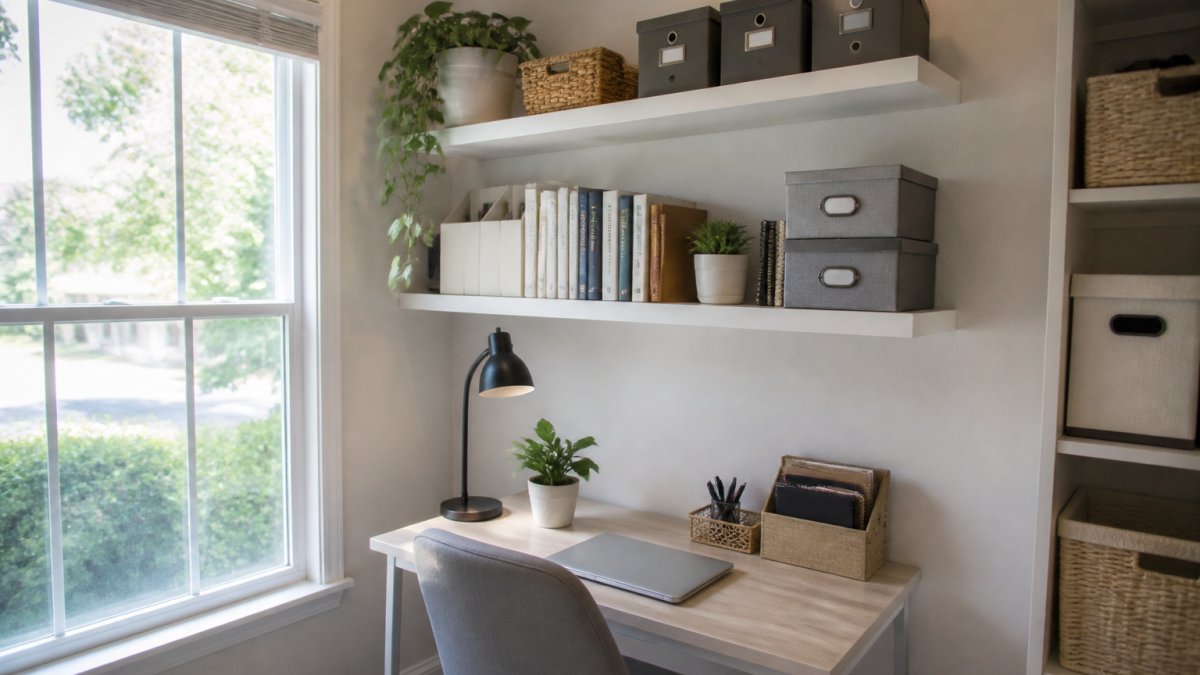
Floating Shelves and Wall-Mounted Shelving
Floating shelves turn bare wall into storage without eating floor space. Mount two or three at eye level for the items you reach for daily.
Keep the heaviest items on the lowest shelf. This protects the shelf and your back. Wall-mounted organizers are a core space-saving move for small offices, and we agree with the logic.
A quick rule for shelf spacing:
- Daily items: at arm's height, easy reach
- Weekly items: just above or below
- Rare items: highest shelf, labeled bins
Pegboards and Wall Organizers
A pegboard is the cheapest way to get tools and supplies off your desk. Hooks hold scissors, cables, tape, and small tools. You can rearrange the layout in seconds as your needs change.
The same idea works with a wall organizer or a rail system. Both keep small items visible and reachable.
Vertical Storage for Home Office: Making the Most of Height
Vertical storage for home office setups means building up, not out. Floor space is scarce. Height is free.
A tall bookcase uses one square meter of floor and gives you five or six shelves of storage. Stackable containers do the same job on a smaller scale.
Stackable storage and modular desks are space-saving answers, and floating shelves and stacking boxes serve the same purpose. The principle is simple: every item should rise, not spread.
Try this stack, bottom to top:
- Heavy binders and files at the base
- Bins for office supplies in the middle
- Light, rarely used items on top
Under-Desk Storage Ideas That Keep the Floor Clear
Under-desk storage ideas work because that space already exists. You just are not using it.
The goal is a clear floor. When the floor is clear, the room feels bigger and you move without tripping. A rolling cart, a shallow drawer unit, or a set of bins can all live under a desk and disappear from view.
Drawers, Carts, and Rolling Bins
A rolling cart is the most flexible option. Pull it out when you need it, push it back when you don't. It also doubles as a side table during video calls.
A shallow under-desk drawer unit suits paper, pens, and small supplies. Keep the unit low enough that your knees clear it when you sit.
Rolling bins handle bulkier items like cables, chargers, and backup stock. Label each bin so you stop digging.
| Under-Desk Option | Best For | Watch Out For |
|---|---|---|
| Rolling cart | Flexible, movable storage | Takes floor space when pulled out |
| Shallow drawer unit | Paper and small supplies | Must clear your knees when seated |
| Rolling bins | Cables and bulk items | Needs labels or it becomes a junk pile |
Small Office Organization Ideas for Desks, Files, and Supplies
Small office organization ideas start with one rule: the desk holds only what you use today. Everything else goes somewhere else. But the deeper problem most guides skip is that paper and cables are not just clutter, they are a workflow and a security question. Handle those two properly and the desk stays clear on its own.
Paper Organization, Digitizing, and Secure Storage
Paper piles up quietly because nothing forces a decision.
A practical paper workflow:
- One inbox tray for new paper, emptied weekly
- One "to file" folder for anything that stays physical
- A scan-and-shred rule for receipts, manuals, and statements you can digitize
- One locked drawer or lockbox for IDs, contracts, and anything with account numbers
- A labeled cloud folder structure that mirrors your physical filing
For digitizing, a phone scanner app is enough for most receipts and statements. Name files with a date-first convention (for example, 2026-03-14-electric-bill) so they sort correctly.
For physical documents you must keep, signed contracts, tax records, IDs, and anything a bank or lawyer asks for, a slim two-drawer cabinet is usually enough for a small office.
Desk Organization, Ergonomics, and Cable Management
Desk organization lives or dies on two things: what you can reach without straining, and what you can see without hunting.
Ergonomics matters here. Keep the items you use hourly, pen, notebook, phone, headset, within arm's reach while seated.
Cable management is the other half. Loose cables create desktop clutter faster than anything else, and they are also a tripping and wear hazard.
A simple cable system:
- Route cables along the back edge of the desk with clips or an under-desk tray
- Mount a power strip under the desk so outlets sit within reach and off the floor
- Label both ends of each cable so you know what plugs in where
- Group cables by device (laptop, monitor, charger) with reusable velcro ties
- Leave a little slack at each connection so cables are not pulled tight
A clear desktop does more for focus than any app. Steelcase research on home office design found that people with the right furniture and tools feel more supported and work more productively, according to Steelcase's guide to designing a home office that works. Your desk setup is part of that, and so is the discipline of keeping only today's work on it.
Rental-Friendly and Budget-Conscious Storage Solutions for Small Home Offices
Most storage guides assume you can drill into a wall. Renters cannot, and plenty of owners would rather not. The good news: no-drill storage has matured well beyond a tension rod in a doorway. The trick is matching the mechanism to the load you actually need to hold.
No-Drill Mechanisms and What They Can Actually Hold
Every damage-free option trades capacity for removability. Here is how the common mechanisms compare:
| Mechanism | Typical Load | Best For | Trade-Off |
|---|---|---|---|
| Tension rod | Light (a few pounds) | Closet shelves, under-shelf dividers | Slips if overloaded or on slick surfaces |
| Over-door rack | Light to medium | Bags, cords, small supplies | Needs a door that closes cleanly |
| Adhesive hooks and strips | Light (varies by product) | Cables, keys, light decor | Fails on textured or dusty paint |
| Freestanding shelving | Heavy | Binders, equipment, bulk supplies | Uses floor space |
| Leaning ladder shelf | Medium | Display and daily items | Can tip if not secured to wall |
| Rolling cart | Heavy | Flexible, movable storage | Needs clear floor to roll |
A simple rule: if it holds more than a few pounds, choose freestanding or rolling rather than adhesive. Adhesive products work best on smooth, clean, painted surfaces and should be removed slowly with a gentle pull to protect the paint.
Budget Tiers Without Brand Names
You do not need to spend much to fix a small office. Think in tiers based on what the purchase solves, not on brand:
- Entry tier: Tension rods, over-door racks, adhesive hooks, cardboard or fabric bins, a single rolling cart. Covers light decluttering and cable control.
- Mid tier: Freestanding shelving, a shallow filing cabinet, stackable plastic bins, a pegboard on a freestanding frame. Covers most small-office needs.
- Investment tier: Modular shelving systems, a proper filing cabinet, a sit-stand desk with integrated storage. For people staying put and working daily.
Spend first on whatever removes the most daily friction. For most people that is a place for paper and a place for cables, not a decorative shelf.
Measure Before You Buy
Before any purchase, measure three things: the wall width you can use, the depth you can afford to lose from the floor, and the height you can reach without a stool. Write the numbers down.
A common pattern among professional organizers is to plan storage around the items you touch every day, then work outward to weekly and rare items.
Conclusion: Build a Clutter-Free Workspace That Works for You
The hard part is not buying shelves. It is matching each storage choice to your actual space, your budget, and how you really work. Measure first, then buy.
Center of Help General Store can help you get there. Our range includes versatile storage solutions for kitchen and workshop, durable home essentials built for daily use, and quality kitchenware and bath linens that round out a functional home.
Get started with Center of Help General Store and build a workspace that stays organized long after the novelty wears off.
Frequently Asked Questions
How do you add storage to a small home office without drilling into walls?
Rental-friendly options include freestanding shelving units, stackable containers, over-the-door organizers, and rolling carts that slide under the desk. These give you small home office storage without permanent fixtures. Look for slim bookcases that fit behind a door or beside a desk, and use stackable bins to build height. Tension rods and adhesive hooks can hold lightweight items like cables or small baskets. When you move, everything comes with you and the walls stay untouched.
What is the best way to keep a small home office desk clutter-free?
Start with a clear desk policy: only items you use daily stay on top. Add a drawer organizer or a small desktop caddy for pens, chargers, and notes. Route cables through clips or a tray so they do not tangle. A wall-mounted shelf or pegboard above the desk moves supplies off the surface. At the end of each day, spend two minutes returning stray items to their designated bins. This habit alone prevents small office organization ideas from falling apart over time.
Where should storage go in a small home office?
Prioritize vertical space first: wall-mounted shelves, tall slim cabinets, and over-door racks use height without eating floor area. Under-desk drawers or a rolling cart handle frequently used items within arm's reach. Filing cabinets or storage containers for paper go beside or behind the desk. Reserve the closet for bulk supplies and archive boxes. The goal is to keep the floor clear and the desktop minimal, so every storage solution for small home offices earns its footprint.
How can I store office supplies without taking up desk space?
Move supplies to the walls and under the desk. A pegboard or wall organizer holds scissors, tape, and pens within reach but off the surface. Under-desk drawers or a slim rolling cart store paper, envelopes, and chargers. Stackable containers on a high shelf handle bulk items like printer paper or backup ink. Label each container so you can find things fast. This approach keeps the desktop for working, not storing.